Welkom - Welcome - Bienvenue - Välkommen - Bienvenida
This blog is about Simone & Åke's travel during October 2011 in South America.
Denna blog beskriver Simone & Åke's resa till Sydamerika oktober 2011.
Peru; Machu Picchu & Amazonas. Equador; Galapagos. Easter Island, Chile
Denna blog beskriver Simone & Åke's resa till Sydamerika oktober 2011.
Peru; Machu Picchu & Amazonas. Equador; Galapagos. Easter Island, Chile
Visar inlägg med etikett Peru. Visa alla inlägg
24 okt. 2011
Lima - Larco Museo
During our stay in Lima we visited Museo Larco. It was a very positive experience, interesting and fascinating to see arts, ceramic, clothing and ceremonial artefacts.
It was founded 1926 by Rafael Larco Hoyle (1901-1966). In 1933 he bought two large private collections, one of over 3,000 pieces from Mr. Carranza in Trujillo, and the other with 8,000 pieces of pottery and textiles from Carlos Roa. During his years of collecting objects from various sources (maybe illegal ones too) he ended up in a collection of around 45,000 pieces. Not all are in the exhibition but the collection "storage" are available to public.
Under vårt besök i Lima vi besökte Museo Larco. Det var en mycket positiv upplevelse; intressant och fascinerande att se gammal Peruiranskt konsthantverk, keramik, kläder och diverse ceremoniella föremål i en fin utställning.
Museet grundades 1926 av Rafael Larco (1901-1966). 1933 köpte han två stora privata samlingar, en av över 3000 objekt från Mr Carranza och sedan ett annat med 8000 föremål av keramik, metall och textilier från Carlos Roa. Under sina år med att samla in föremål från olika källor (kanske illegala också) kom det att bli cirka 45, 000 stycken. Alla visas inte på utställningen, men museets "lager" är tillgängligt för allmänheten.
It was founded 1926 by Rafael Larco Hoyle (1901-1966). In 1933 he bought two large private collections, one of over 3,000 pieces from Mr. Carranza in Trujillo, and the other with 8,000 pieces of pottery and textiles from Carlos Roa. During his years of collecting objects from various sources (maybe illegal ones too) he ended up in a collection of around 45,000 pieces. Not all are in the exhibition but the collection "storage" are available to public.
Lima - Barranco District
We had to break up Manu National Park - tour due to altitude sickness and other problems.Instead we took next fligth to Lima to recover on lower altitudes-
The pictures are from Baranco district were we stayed at a nice hostal.
22 okt. 2011
20 okt. 2011
Howler Monkeys
We were pleasantly surprise to see Red Howler Monkeys climbing up the river bank after eating /licking clay. Howler monkeys are among the largest of the New World monkeys.
Vrålapor är större och har grövre kroppsbyggnad än andra apor från Nord-/ Sydamerika med en svans lika lång som kroppen. De här drack vatten eller sökte mineralrik lera att slicka på.
To Manu National Park
Travelling on the river Madre Dios to Manu National Park
Manú National Park is the largest National Park in Peru, with an area of 15 000 km².
In 1977, UNESCO recognised it as a Biosphere Reserve and in 1987, it was pronounced a World Heritage Site. The park protects several ecological zones ranging from as low as 150 meters above sea level in the South West Amazon to Central Andean at altitudes of 4200 meters.
Weather was cloudy. Temperature around 30-35 C
Manú National Park is the largest National Park in Peru, with an area of 15 000 km².
In 1977, UNESCO recognised it as a Biosphere Reserve and in 1987, it was pronounced a World Heritage Site. The park protects several ecological zones ranging from as low as 150 meters above sea level in the South West Amazon to Central Andean at altitudes of 4200 meters.
Weather was cloudy. Temperature around 30-35 C
Cusco
Cusco was once the site of the historic capital of the Inca Empire (13th century-1532). It was declared a World Heritage Site in 1983 by UNESCO. We visited the Inca Museum and stayed in a picturesque part of town called San Blas. Altitude 3,399 m
Temperature 20-24 C at day, 15 C at evening-night. Mix weather during stay; clody, some rain and some sun.
Ollantaytambo

During the Inca Empire, Ollantaytambo was the royal estate of Emperor Pachacuti who conquered the region, built the town and a ceremonial center here.
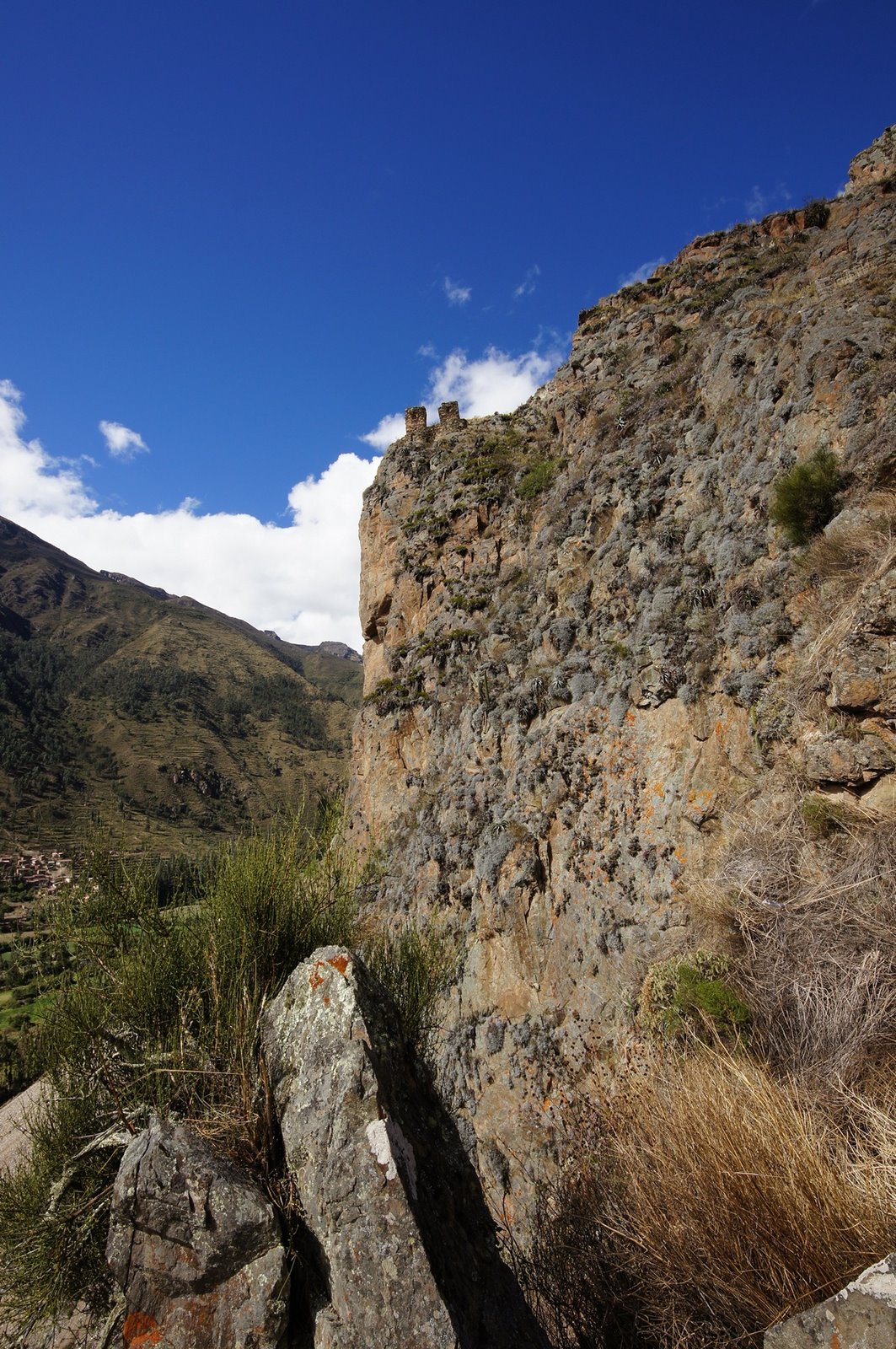
The Incas built several storehouses out of fieldstone on the hills surrounding the town. Their location at high altitudes, where there is more wind and lower temperatures, defended their contents against decay. To enhance this effect, the houses called qollqas feature ventilation systems. It is believed that they were used to store the production of the agricultural terraces built around the site.
Ollantaytambo eller Ullantaytanpu, vilket ungefär betyder Min härskares förråd, tror man är det enda återstående exemplet på för-columbiansk stadsplanering. De 6 stenarna högst upp på befästningen som bildar Soltemplet, väger cirka 50 ton vardera och står tätt inhop.
Prenumerera på:
Inlägg (Atom)